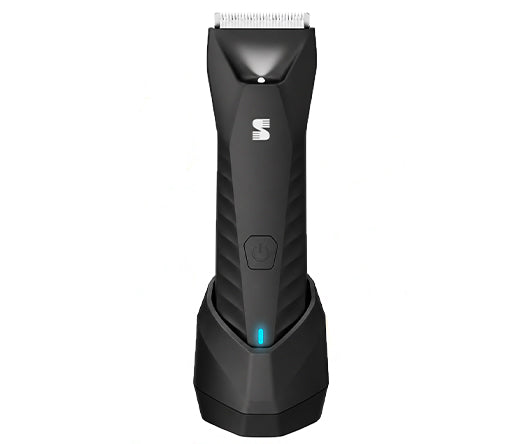
A good body hair trimmer should match the areas you plan to groom, the amount of hair you want to remove, and the level of control you need. For chest, stomach, legs, and other below-the-neck areas, the main goal is usually controlled shortening rather than removing every visible hair at skin level. Start by deciding whether you want to reduce bulk, maintain a consistent length, or create a closer finish. Then compare guard options, cutting-head control, ease of cleaning, and maintenance needs. The right choice is the tool that handles your regular grooming routine without requiring unnecessary attachments or complicated adjustments.
Start With the Areas You Plan to Trim
Body hair varies across the chest, abdomen, shoulders, arms, legs, and other below-the-neck areas. A trimmer that works well over a broad, relatively flat area may feel less manageable around curves, joints, or places where visibility is limited.
For large areas such as the chest and legs, cutting width and trimming speed matter. A wider head may cover more hair with fewer passes, although it can provide less precision around edges. A narrower head may take longer but can be easier to guide around the waistline, shoulders, knees, or other changing contours.
Think about how many areas one tool needs to cover. If you only maintain chest hair, a simple trimmer with one or two useful guards may be enough. If you groom several body areas, look for a balanced design that can handle broad coverage while remaining controllable in tighter spaces.
You should also consider how easily you can see the cutting area. A large housing or bulky attachment may block your view, making it harder to follow natural body lines. Good visibility helps you avoid uneven patches and repeated passes.
Match the Tool to Your Target Length
Before comparing features, decide what “trimmed” means for your routine. Some men want to reduce thick body hair while keeping it visible. Others prefer a shorter, more uniform finish. These goals require different guard lengths and different levels of cutting control.
Longer guards are useful when you want to reduce volume without creating a closely cropped appearance. Medium settings can help maintain a neat, consistent length across the chest, stomach, or legs. Short settings remove more visible length but may require slower movement and more careful skin preparation.
A body trimmer is not automatically the same as a foil shaver or manual razor. Trimmers are primarily designed to shorten hair with controlled cutting. Some can produce a relatively close result, but a skin-level finish usually requires a different shaving mechanism or an additional finishing step.
Check whether the available guards match lengths you will actually use. A long list of attachments adds little value when most of them remain in storage. Two or three practical settings may be more useful than a large kit with overlapping options.
Choose by Grooming Scenario
The following table connects common grooming goals with the tool characteristics that are most likely to matter.
| Grooming scenario | Main priority | Useful characteristics | Possible tradeoff |
|---|---|---|---|
| Reducing thick chest or stomach hair | Fast, even coverage | Wider cutting head and a longer guard | Less precision near edges |
| Maintaining a uniform body-hair length | Consistency | Stable guards with clear length settings | Fixed guards offer fewer adjustments |
| Trimming legs or arms | Coverage and comfortable handling | Balanced grip and efficient cutting width | Larger tools may be harder to guide around joints |
| Shaping around waistlines or body contours | Control and visibility | Compact head and easy-to-hold body | Narrow heads may require more passes |
| Switching between several body areas | Versatility | Multiple useful guards and easy cleaning | More attachments require more storage |
| Keeping a simple routine | Convenience | Few parts and straightforward controls | Fewer settings limit styling options |
This kind of scenario-based comparison is more useful than choosing by the number of accessories. A tool should solve the tasks you perform regularly, not provide features that sound impressive but do not improve your routine.
When evaluating a body hair trimmer for men, consider how its overall format fits your intended grooming areas and preferred finish. The relevant question is not whether it has the most features, but whether its cutting setup, guards, handling, and cleaning process support the way you plan to use it.
Compare the Main Feature Tradeoffs
Every design choice affects both performance and usability. Understanding the tradeoffs can help you avoid paying for features that conflict with your actual priorities.
Cutting width versus precision: A wider blade can make chest, abdomen, arm, and leg grooming faster. However, a compact cutting head may be easier to control around curves and boundaries. Choose coverage for large-area maintenance and precision for detailed shaping.
More guards versus simpler storage: Several guards can support different lengths, but they also create more parts to organize and clean. A smaller selection is often sufficient when you normally use the same one or two settings.
Adjustable combs versus fixed guards: Adjustable combs let you change length without swapping attachments. Fixed guards can be simpler and may feel more stable, depending on their design. Check whether adjustment controls are easy to understand and unlikely to move during use.
Close cutting versus easier length management: A very short setting may help create a closely cropped appearance, but it can also make uneven pressure or repeated passes more noticeable. Longer settings are generally more forgiving when your goal is basic maintenance rather than a near-smooth finish.
Wet-use convenience versus dry-use simplicity: A washable or wet-use design may simplify cleanup and support use in different settings. However, you should only use a device with water in the ways allowed by its manufacturer. A dry-use model may still be practical when loose hair can be collected and the head is easy to brush clean.
Battery operation versus corded consistency: Rechargeable trimmers offer easier movement and fewer cable restrictions. Corded models avoid charging interruptions but may be less convenient when reaching different body areas. For rechargeable tools, consider whether the charging routine fits how frequently you groom.
Check Cleaning, Handling, and Maintenance
Cleaning requirements can determine whether a trimmer remains convenient after the first few uses. Hair can collect beneath guards, around cutting teeth, and inside removable heads. A design with easily accessible cutting parts generally takes less effort to maintain.
Confirm which parts can be rinsed and which should remain dry. “Washable head” does not always mean the complete device can be submerged. Follow the product instructions rather than assuming that all body trimmers have the same level of water resistance.
Handling is equally important. The trimmer should remain secure in your hand as you change angles or reach across the torso and legs. A tool that is too heavy may become tiring during large-area grooming, while a very small tool may require extra passes.
Also check the maintenance routine for the cutting head. Some designs may require occasional lubrication, brushing, or replacement parts. Consider whether replacement guards or heads are available before choosing a tool you expect to use for several years.
Good maintenance is straightforward: remove trapped hair after use, allow washable components to dry completely, store guards where they will not bend, and charge the device according to its instructions. These habits support consistent cutting and reduce avoidable wear.
Use This Buying Checklist
Before making a decision, confirm the following points:
-
Which body areas will you trim most often?
-
Do you want reduced volume, a uniform short length, or a closer finish?
-
Are the included guard lengths relevant to that goal?
-
Is the cutting head wide enough for efficient coverage?
-
Can you still control it around curves, joints, and boundaries?
-
Does the housing allow a clear view of the cutting area?
-
Are the controls easy to operate while holding the trimmer?
-
Can the cutting head and guards be cleaned without excessive disassembly?
-
Are the water-use instructions clear?
-
Does the charging or power setup suit your routine?
-
Are replacement heads, guards, or maintenance parts available?
-
Will you realistically use the included attachments?
Avoid choosing solely by attachment count, aggressive marketing language, or the promise of an extremely close result. A body trimmer is most useful when it provides predictable length control across the areas you regularly maintain.
Make the Final Choice
Choose a body hair trimmer by starting with your grooming routine rather than a product feature list. Define the body areas, preferred length, and desired finish first. Then compare cutting width, guard selection, visibility, grip, cleaning, and power options.
For broad chest, stomach, arm, or leg maintenance, efficient coverage may be the priority. For contours and defined boundaries, control may matter more than speed. A practical trimmer should make your normal routine easier, produce a manageable and consistent result, and remain simple enough to clean and maintain after every use.