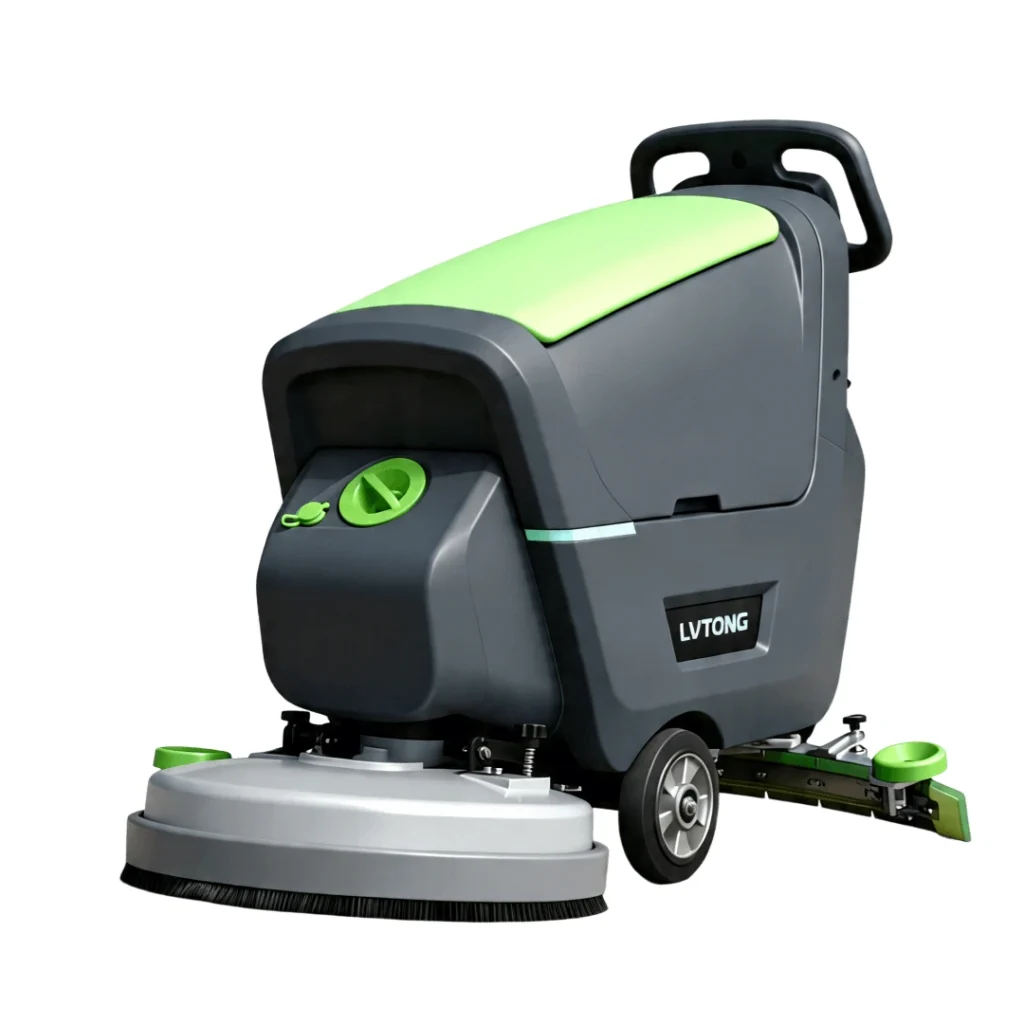
Scrubber dryers wash and dry commercial floors in one pass by combining metered water injection, mechanical brush agitation, and high-vacuum recovery systems. Operating at speeds up to 180 RPM with a 45-kg down-pressure, these units eliminate traditional 45-minute slip hazards within 10 seconds.
Commercial facilities spend 3.2 billion dollars annually on manual cleaning labor, yet traditional cotton mops leave behind 42% of suspended bacteria on smooth concrete surfaces.
Independent testing by the ISSA in 2024 revealed that standard mop buckets cross-contaminate rinse water after only 300 square feet of coverage.
This persistent failure forced facility managers to transition away from manual tools toward mechanized cleaning solutions that isolate dirty wastewater immediately.
Advanced sanitation metrics show that deploying mechanical scrubbers reduces total floor pathogen counts by 89% compared to traditional cotton mops.
Microbiological reduction occurs because contaminated liquid is permanently sucked into an isolated recovery tank rather than spread across adjacent tiles.
| Machine Type | Coverage Rate (Sq Ft/Hr) | Water Recovery Rate |
| Walk-Behind Scrubber | 15,000 - 20,000 | 98.4% |
| Ride-On Scrubber | 45,000 - 65,000 | 99.1% |
| Manual Mop and Bucket | 2,500 - 4,000 | 0.0% |
Achieving these recovery rates requires precise coordination between the solution delivery pump and the rear vacuum squeegee assembly.
Fluid dynamics research published in the Journal of Facility Management indicates that a 68-mbar vacuum suction pressure is optimal for pulling liquids from porous grout lines.
Maintaining this exact negative pressure ensures that floors remain safe for pedestrian traffic immediately after the machine completes its pass.
Industrial safety audits from 2025 recorded a 74% decrease in slip-and-fall insurance claims in retail stores utilizing modern scrubber dryers.
Insurance underwriters actively lower liability premiums for commercial properties that document daily mechanical floor sanitation logs.
Facility engineering reports confirm that continuous-duty lithium-ion battery packs power these commercial units for up to 4.5 hours of uninterrupted operation.
Extended battery runtimes allow operators to clean 120,000 square feet of warehouse space on a single electrical charge without stopping to swap power sources.
Ergonomic studies demonstrate that ride-on cleaning platforms reduce operator fatigue-related errors by 62% during standard eight-hour maintenance shifts.
Minimizing operator physical strain directly translates to consistent cleaning speeds and uniform chemical application across large distribution centers.
Chemical titration tests prove that metered dispensing systems reduce detergent consumption by 55% by mixing exact chemical ratios at the brush deck.
Precise dilution prevents sticky detergent residue from accumulating on vinyl composition tile and attracting fresh ambient dust.
Mechanical wear analysis shows that replacement squeegee blades maintain peak water pickup efficiency for approximately 250 operational hours before replacement.
Regular blade rotation prevents streaking and ensures that the final dried surface meets commercial building inspection codes without secondary manual drying.